


Garden in apartment balcony
Even in high-rise apartments and condominiums, you can create a "garden" in a balcony or open terrace. Whether your goals are modest or elaborate, consider some basic points before embarking on such a project.
 Mrs Singh/Good Housekeeping
 जून 03, 2013
Even in high-rise apartments and condominiums, you can create a "garden" in a balcony or open terrace. Whether your goals are modest or elaborate, consider some basic points before embarking on such a project.
Plan: Check with a qualified professional or your builder about the structural loading capacity of your balcony and terrace - weight restrictions may not allow for anything more than a few tables, chairs and flowerpots. Plan carefully, in a small space every inch counts. Draw a diagram that is to scale; include the various built-in elements, furniture, planters, and water space. Make sure you leave sufficient room to move around easily. You will thank yourself later for taking out the time to plan carefully - saves you plenty of bother and expense later.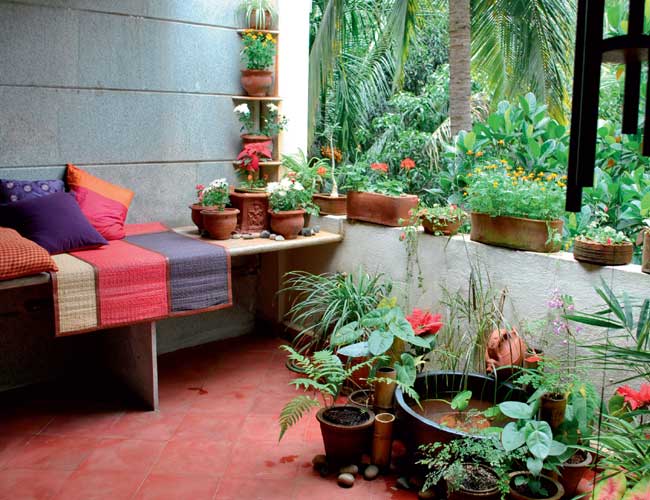
Lighting: Mix and match to come up with your own unique layout - have candles for tables, a spot light for a piece of art, an up light to add drama to a high plant, a string of fairy lights, wall mounted devices, hanging lanterns made of wood, glass, metal, and coloured paper hang-ons for special occasions. There are two types of lights used in contemporary gardens - namely walkover and diffused lights. Walkover lights are embedded in the floor and diffused lights are installed to enhance the visibility all around - they don't hurt the eyes and don't attract insects... 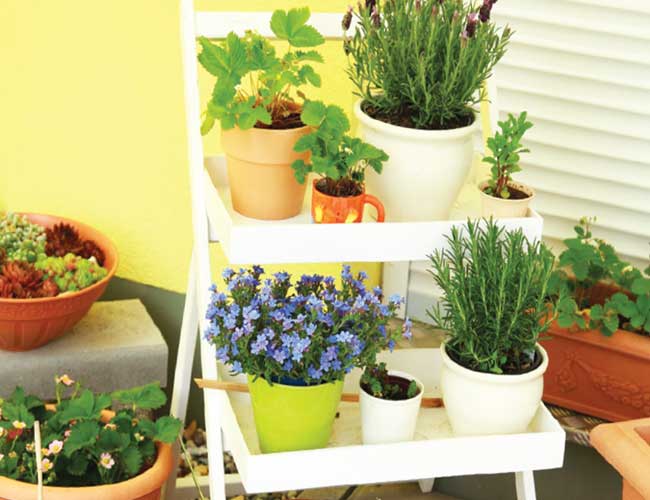
Plants: Make note of the position of the sun, the strength of sunshine and pattern of winds - these factors create a speci f ic microclimate. You should choose your plants based on these factors. Grow a collection of oleander, araucarias, ficus (green or black), dieffenbachia, monstera, caladium, juniper, algonema, crotons, coleus, miniature trees of Chinese oranges, bougainvilleas, money plants and cacti.
Keep creepers as wall coverage. Don't turn your house into a veritable jungle though; maintain the feeling of space and harmony. Soak neem leaves in water, strain and spray to avoid plant infect ions. Regularly prune weeds and snip decayed leaves. Occasionally use diluted soap spray to stop fungal infection on plant surfaces. 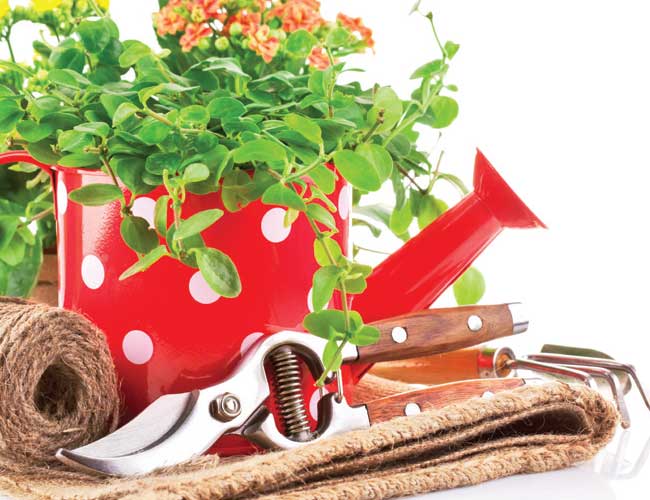
Accessories: Enhance your garden with decoration material and outdoor decor items such as a water body made of stone, marble or terracotta, cast plaster statues, animal and human figurines, river stones, rocks, driftwood, pinecones and terracotta bells. Don't overdo it though, one or two pieces will suffice.
Storage space: Do create some storage space at a convenient location for keeping gardening tools, watering pipes, potting soil and other miscellaneous items. If you still feel overwhelmed or unsure about how to create your ideal garden, hire a qualified professional such as a landscape architect to help you. Once the garden is designed and set up by the professional, you could learn to maintain it by yourself.


लगातार ऑडनारी खबरों की सप्लाई के लिए फेसबुक पर लाइक करे